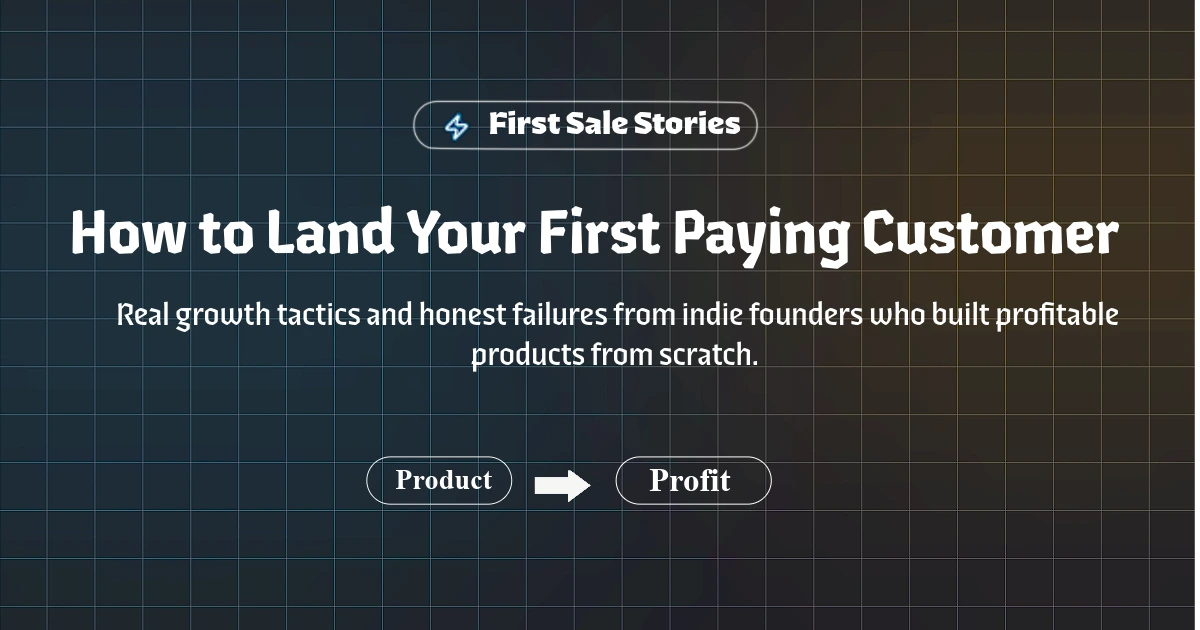
Stop guessing. Learn the exact moves that turn side projects into profitable products.
Every full-stack developer, indie hacker, and solo founder knows the feeling of a failed launch. You spend weeks or months writing clean code, designing a simple UI, and perfecting the core features. You finally hit publish, launch on Product Hunt or X, and then... nothing. No traffic and no sales.
The harsh reality of building software is that great code does not automatically equal sales. Finding your first paying customer is a completely different skill set from engineering.
First Sale Stories is a platform built specifically to solve this exact problem. It is a collection of real-world case studies detailing exactly how founders secured their very first paying users. Instead of broad motivational speeches, it delivers practical, step-by-step breakdowns that you can actually apply to your own product today.
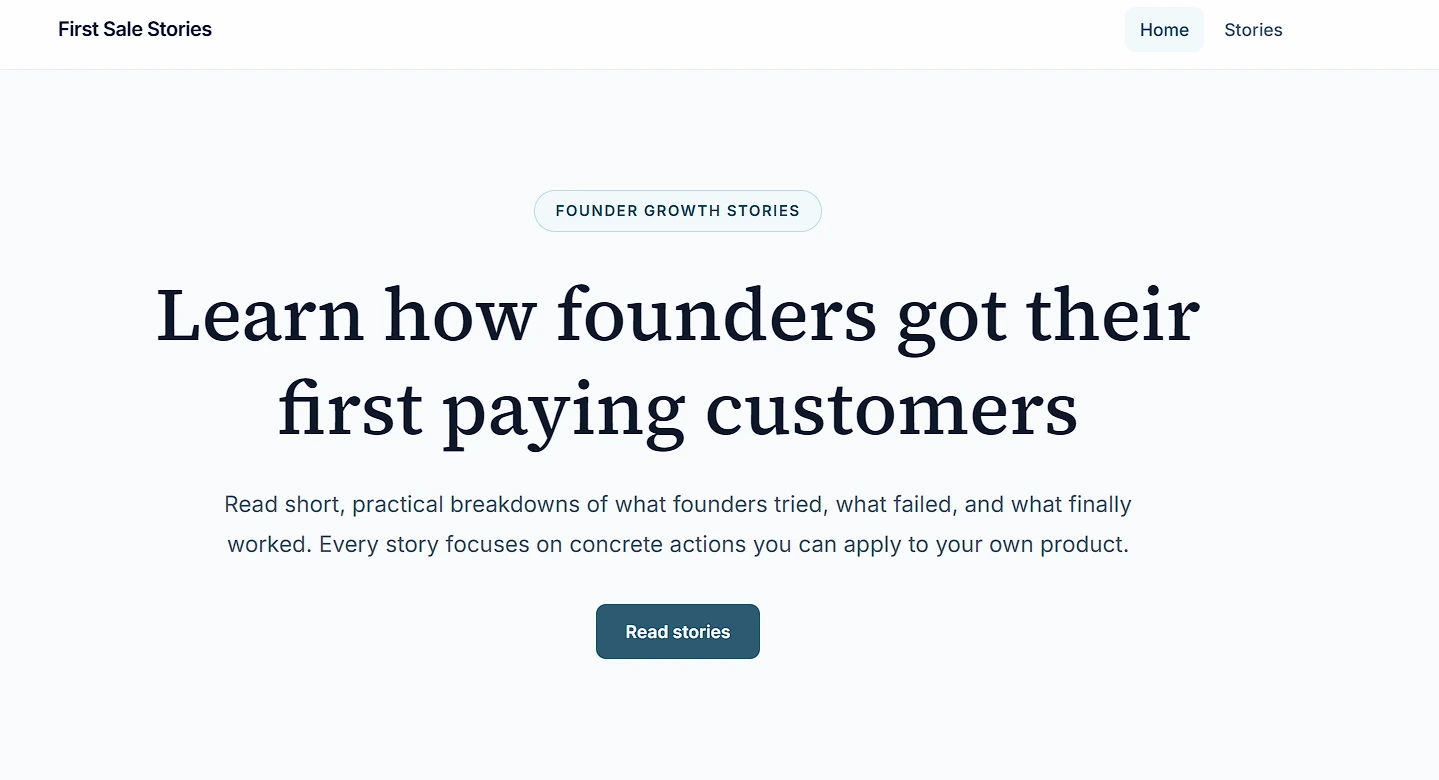 The clean, straightforward homepage of First Sale Stories, focusing directly on founder growth.
1. Actionable Strategies, Not General Advice
The internet is full of startup advice, but most of it is written by venture-backed CEOs talking about million-dollar ad budgets or large marketing campaigns. That advice is completely useless to a solo developer trying to get early sales on a small budget.
First Sale Stories avoids this problem by focusing strictly on the early starting phase.
- The Exact Moves: The stories do not just say "we used SEO" or "we did content marketing." They break down the specific cold email templates, the exact Reddit communities targeted, or the precise direct messages sent to land that crucial first transaction.
- Clear Steps: Every story is structured to highlight clear actions. You get a clear map of what was done, making it incredibly easy to adapt those same strategies for your own SaaS, deployment tool, or AI extension.
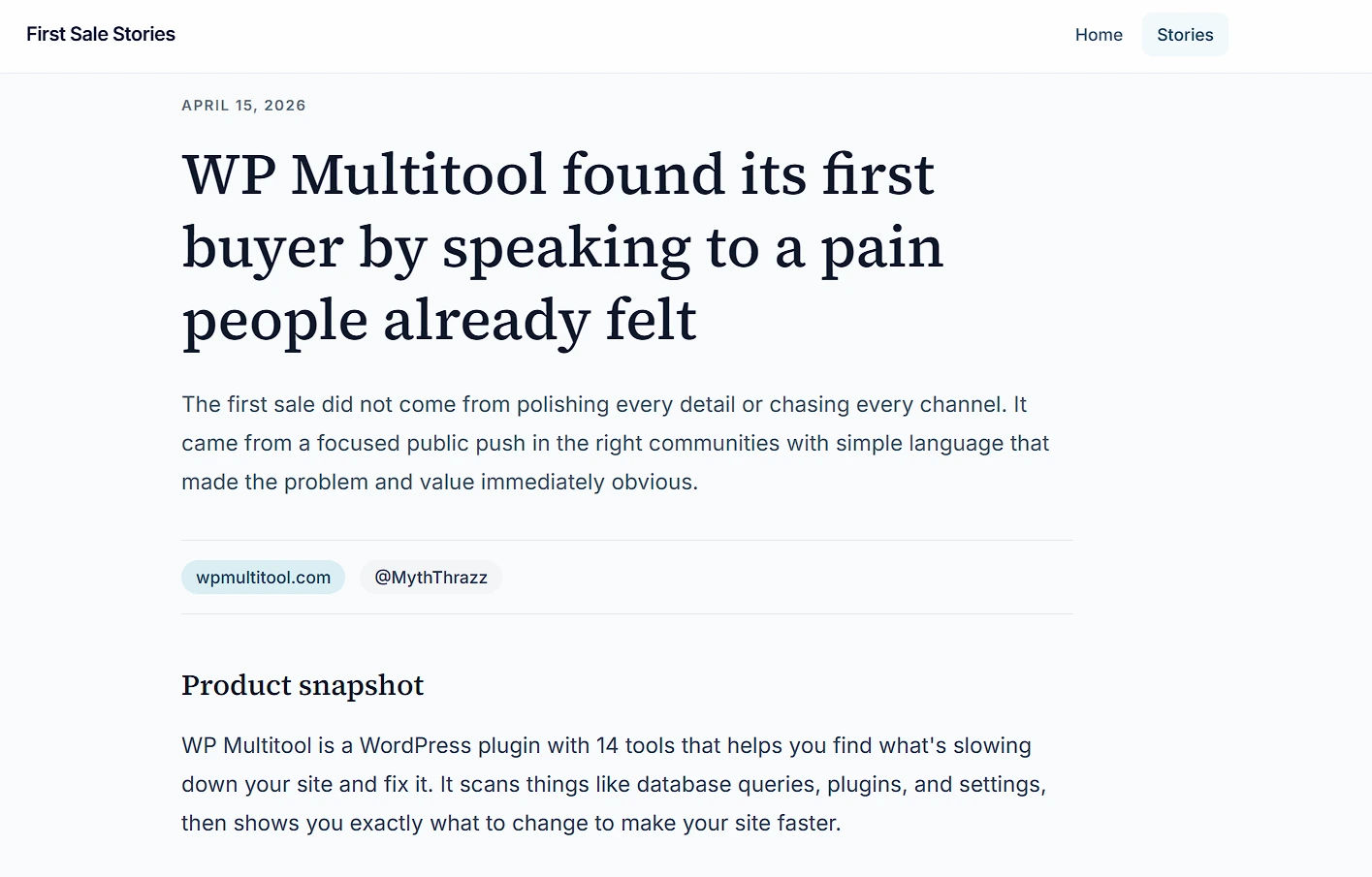 An example of a story breakdown, highlighting specific strategies like speaking to existing pain points instead of polishing details.
2. Honest About the Failures
One of the best features of First Sale Stories is its honesty regarding failure. Success is rarely a straight path, especially in the early days of a startup.
Before finding the strategy that finally worked, most founders tried three or four things that failed. First Sale Stories clearly highlights these early mistakes. Founders share the marketing channels that wasted their time, the messaging methods that got ignored, and the pricing models that pushed away early users.
By reading about what did not work for others, you can avoid making the same expensive and time-consuming mistakes in your own marketing efforts.
3. Built Specifically for the Indie Builder
This platform is not designed for large corporate teams; it is built for everyday creators. The target audience is very clear: indie founders, full-stack developers, and small teams trying to gain users without a huge marketing budget.
Because it targets developers, the content is highly practical. It respects your time. The case studies are short, direct, and very easy to read, allowing you to learn a new marketing tactic in the morning and immediately test it out on your own project by the afternoon.
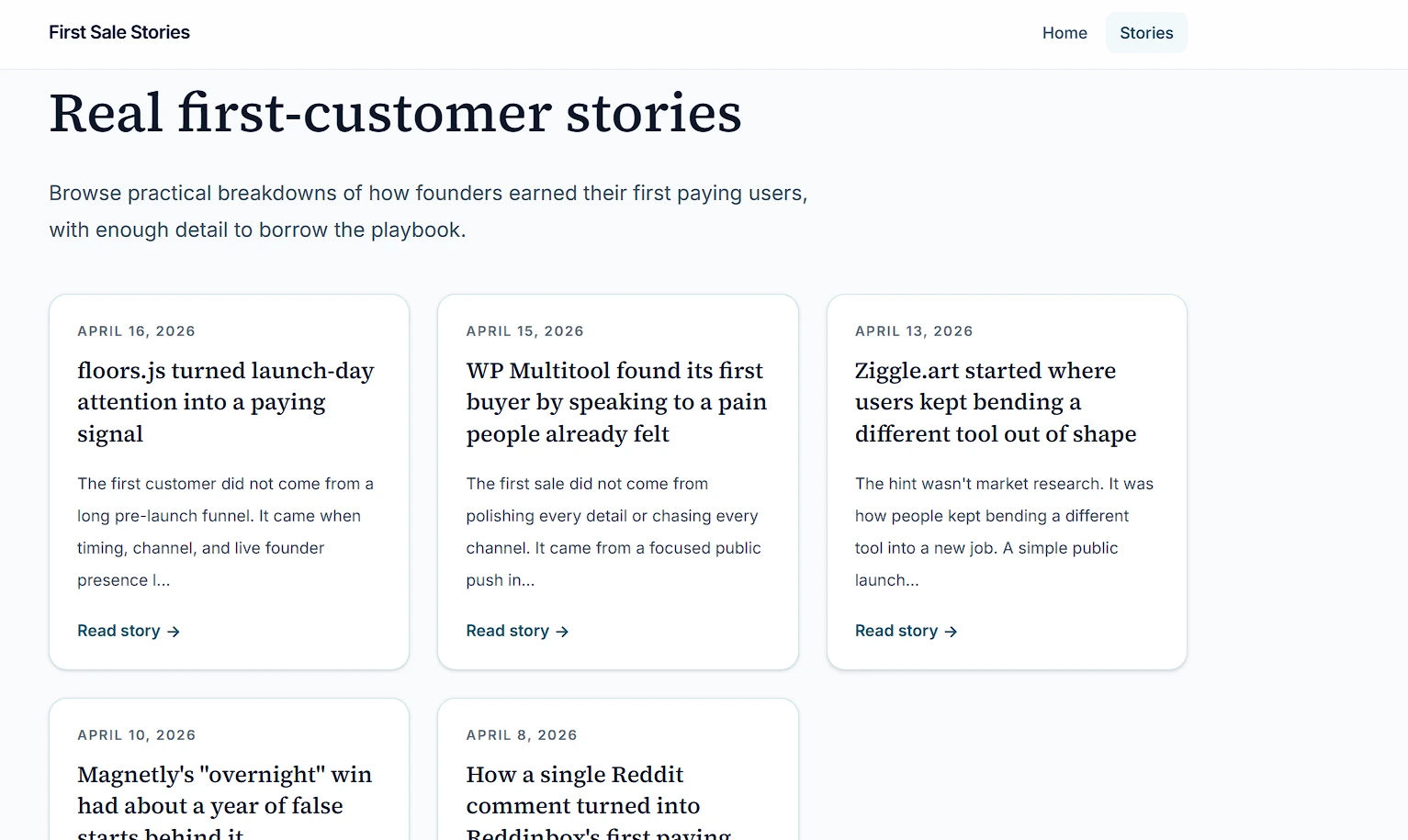 A look at the stories index, showing practical titles that focus on the actual mechanics of the first sale.
4. The Perfect Resource for Founder Research
If you are someone who regularly networks with other founders, conducts interviews, or curates tech tools, this platform doubles as an incredible research hub.
Reading through these case studies gives you a deep understanding of the common problems founders face across different markets. It reveals the patterns of success in the modern software space, giving you the knowledge to build better products, write better marketing copy, and connect more naturally with the developer community.
Final Thoughts: Why You Need to Bookmark This
Marketing is usually the weakest skill for developers. We naturally default to adding more features when we should really be talking to users.
First Sale Stories is the perfect solution for that weakness. By collecting the exact strategies that have already worked for others, it makes early-stage growth easy to understand. It proves that you do not need a marketing degree or a large audience to get your first customer; you just need the right approach.
If you are currently building a product and wondering how you are actually going to sell it, stop scrolling social media and start reading these case studies.
Discover the tactics that work at firstsalestories.com.


