Why AI Agents Still Struggle With Real Tasks
Artificial intelligence tools have improved rapidly. Models can write text, analyze data, summarize information, and even assist with coding. But when it comes to real world workflows, another challenge appears quickly.
AI agents rarely work alone. They need access to tools.
An assistant might need to read data from a CRM, send messages through a communication platform, retrieve information from internal databases, or trigger workflows inside automation systems. Every one of those actions requires an integration.
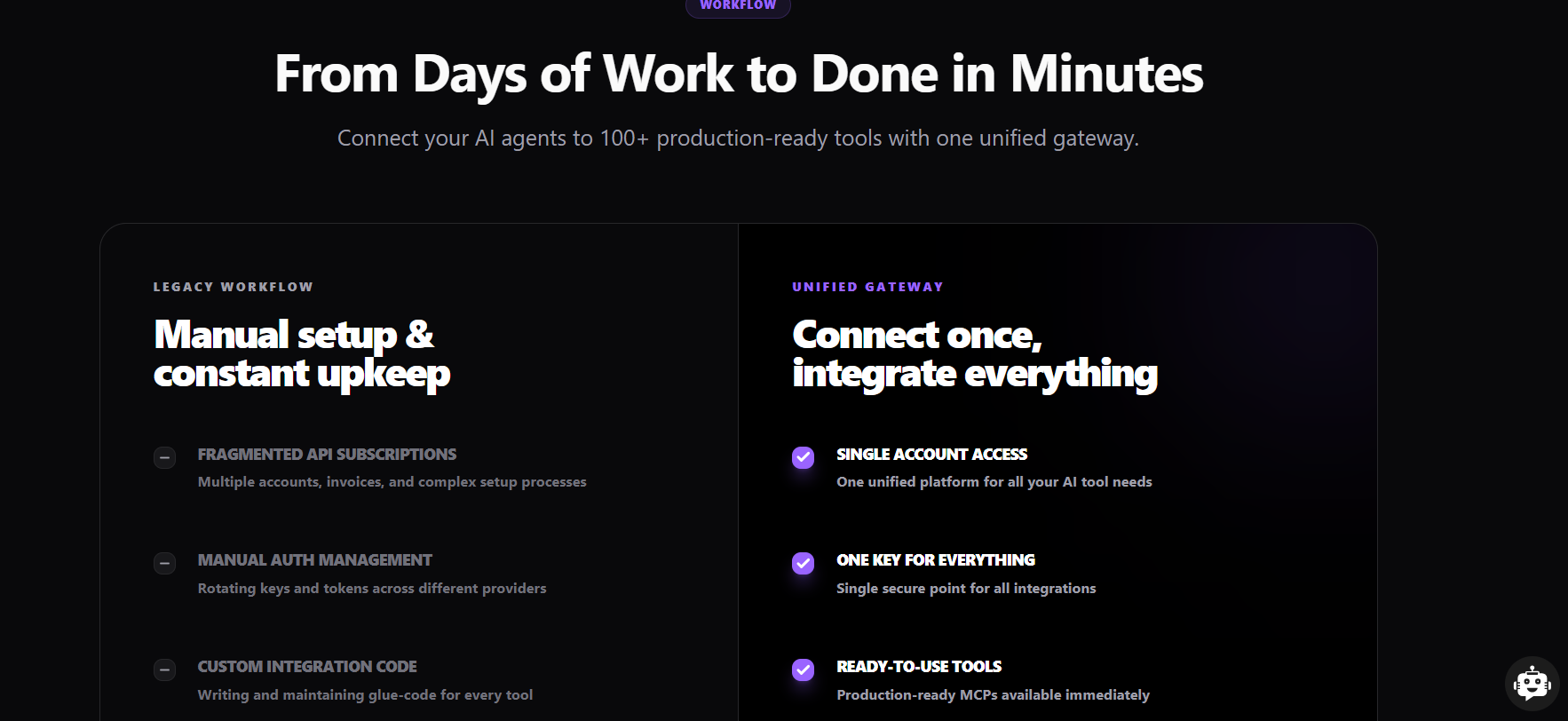
As more tools are added, the system becomes harder to manage. Each connection requires authentication, error handling, and ongoing maintenance.
The AI might be smart, but the infrastructure around it becomes complicated.
This is the gap MCP360 focuses on solving.

The Integration Problem Behind AI Systems
When developers build AI powered applications, the model itself is often the easiest part. The real challenge appears when that model needs to interact with external systems.
A single AI assistant may need access to several services such as databases, knowledge bases, CRM tools, messaging systems, and analytics platforms.
Traditionally this requires building separate integrations for each service.
Over time this leads to complex architectures where developers maintain dozens of connectors and API clients. Every new tool adds another layer of work.
What starts as a simple AI assistant can turn into a difficult system to maintain.

Introducing a Gateway for AI Tools
MCP360 approaches this challenge differently. Instead of building individual integrations for every service, the platform provides a unified gateway that sits between AI agents and external tools.
Developers connect their agent to MCP360 once. The platform then manages communication with multiple services through that single connection.
This creates a cleaner architecture.
Instead of maintaining separate integrations, developers interact with one centralized layer that manages tool access, authentication, and routing.
The result is a system that is easier to build and easier to scale.
How MCP360 Works
The platform acts as a centralized access point for tools that AI agents can use.
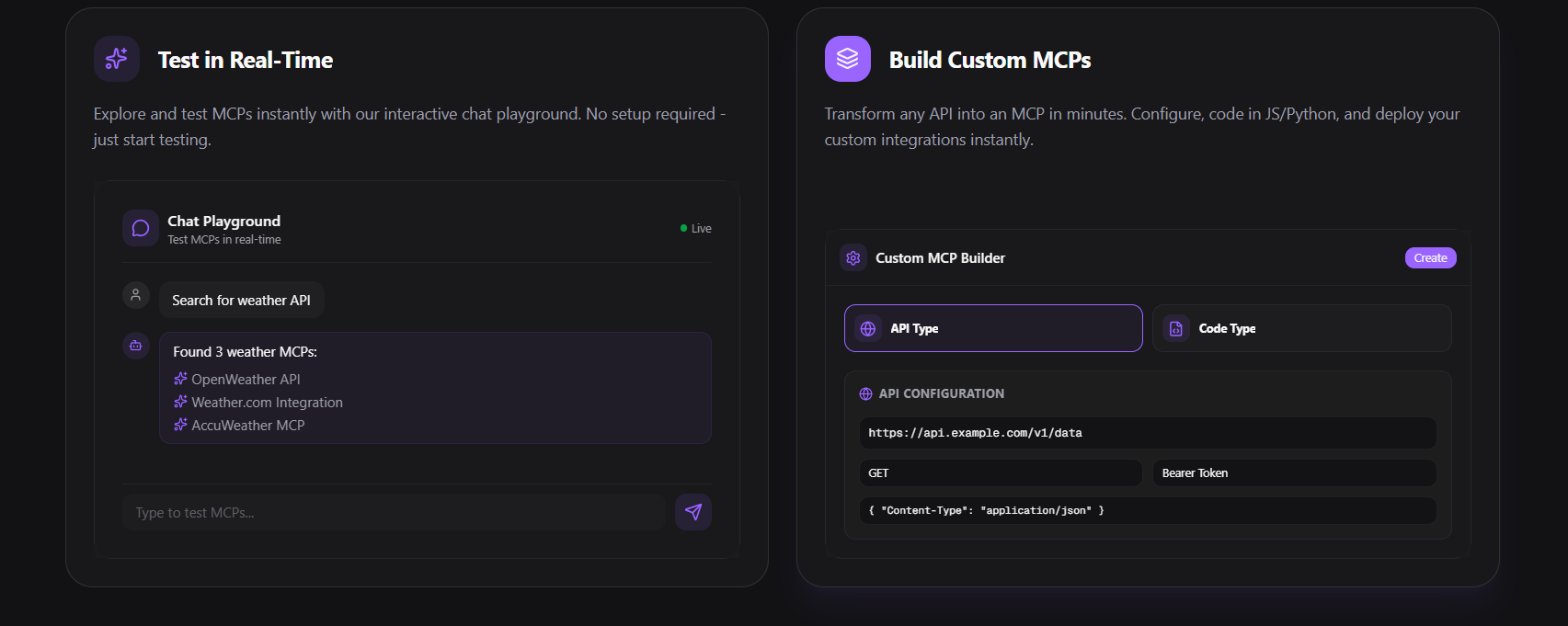
First, developers connect their AI application to MCP360. Then they configure which tools or services should be available to the agent. Once configured, the agent can interact with those services through the gateway.
Instead of writing multiple integration modules, developers simply route requests through MCP360.
This approach simplifies the architecture and reduces the amount of custom code needed when expanding the system.
Building AI Systems That Actually Do Work
The most useful AI systems are not just conversational tools. They perform actions.
They retrieve data, update records, trigger workflows, and communicate with other services. For that to happen reliably, agents must interact with many different tools.
MCP360 focuses on enabling this capability without forcing developers to rebuild integration logic every time a new service is added.
By centralizing connections through a gateway layer, developers gain a more structured way to extend the capabilities of their agents.

How to Use MCP360
Getting started with MCP360 follows a simple structure.
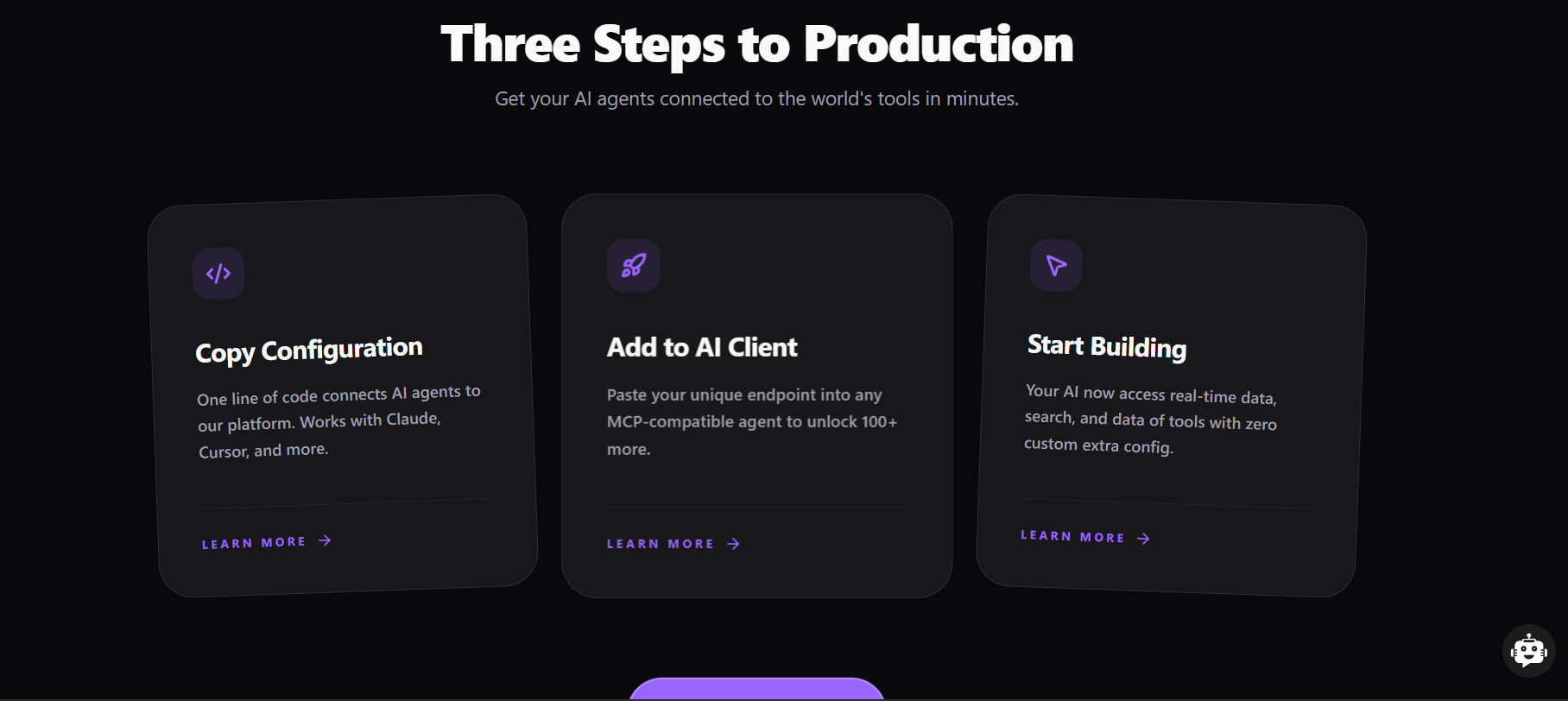
First, developers connect their AI application or agent to the MCP360 platform.
Next, they configure which tools or APIs the agent should be able to access. This could include internal services, third party platforms, or automation systems.
Once configured, the agent interacts with those tools through MCP360. The gateway handles routing requests, managing authentication, and returning responses.
From the developer perspective, the integration layer becomes significantly easier to manage.

Where MCP360 Becomes Useful
The platform becomes particularly valuable when AI systems must interact with multiple services simultaneously.
Common scenarios include:
- AI assistants that retrieve and update business data
- automation agents that trigger actions across platforms
- internal tools that connect AI with company systems
- AI powered applications that rely on multiple APIs
Instead of building integrations repeatedly, developers gain a reusable infrastructure layer designed specifically for AI agents.

The Rise of AI Infrastructure Platforms
As AI moves from experimentation to production systems, infrastructure becomes increasingly important.
The focus is shifting from individual models to the systems surrounding those models. Reliable connections to tools, services, and data sources are essential for practical AI applications.
Platforms like MCP360 represent a growing category of infrastructure designed to support agent based architectures.
They provide the connective layer that allows AI systems to interact with the broader software ecosystem.