For modern travelers, planning an international or domestic trip requires a significant investment of time and effort. Whether a person is organizing a quick weekend getaway to a nearby city or a complex two-week family vacation across Southeast Asia, the primary goal of the trip is usually to relax, unwind, and explore new environments. However, the standard digital tools currently available to plan these trips often create a stressful and complicated pre-trip experience. This is especially true for Indian passport holders, who face a unique set of planning challenges such as specific international visa requirements, currency conversion calculations, and strict dietary preferences.
Historically, travel planning relied on scattered and manual steps. A traveler might use one website for booking flights, navigate to an official government site to check visa requirements, create a manual spreadsheet to track the daily budget, and read through endless travel blogs to figure out a logical daily itinerary. While the recent introduction of generative artificial intelligence (AI) tools promised to fix this scattered approach, most of these generic tools remain disconnected from live pricing and actual hotel booking realities.
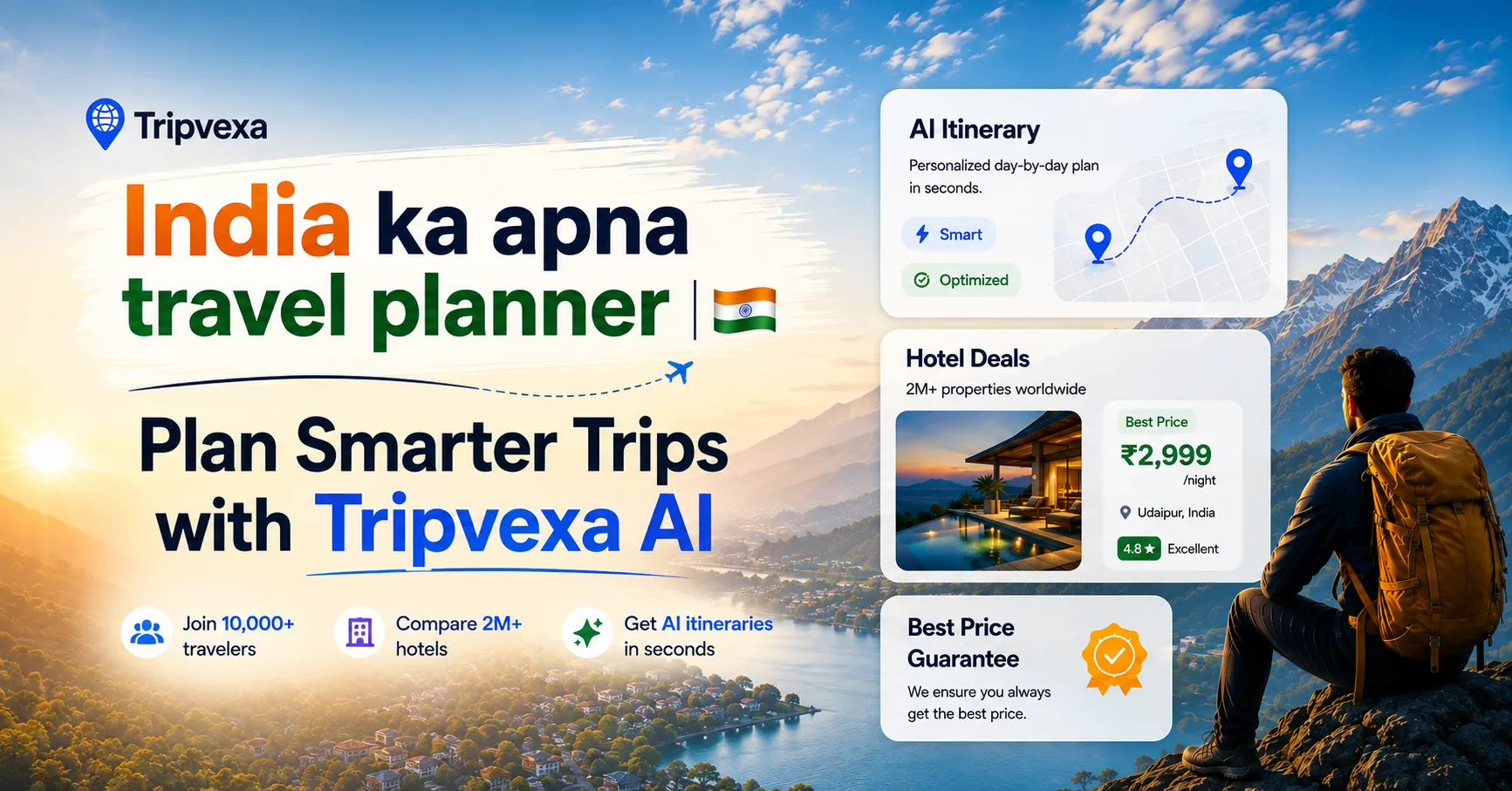
Tripvexa is a software platform built explicitly to address this gap in the Indian market. Operating as an integrated AI travel planner and booking engine, it allows users to move past scattered research. By focusing on three core pillars (AI-Powered Itineraries, Real-Time Hotel Booking, and India-Centric Context), the platform allows users to build, price, and book trips entirely within a single interface.
This guide provides an objective, detailed analysis of Tripvexa. We will explore the specific planning problems the platform solves, examine its core AI engine, break down the end-user experience, and analyze how it fits into the broader travel technology ecosystem.
1. The Travel Planning Dilemma for Indian Tourists
To understand the utility of Tripvexa, it is necessary to first examine the current landscape of travel planning and the specific friction points that travelers face when constructing an itinerary from India. When a person decides to plan a trip today, they are met with a large amount of disconnected digital information. This creates distinct operational bottlenecks that complicate the planning phase and often lead to traveler fatigue before the trip even begins.
The Problem with Generic AI and Global Online Travel Agencies
Modern trip planning usually falls into two distinct categories: using generic AI chatbots or using traditional Online Travel Agencies (OTAs). Both methods present significant friction for the average traveler:
- The Currency and Context Gap: Generic AI tools are typically built for a global or Western audience. They often estimate travel costs in United States Dollars and fail to account for the actual purchasing power of an Indian traveler. Furthermore, they rarely account for the specific visa restrictions associated with an Indian passport. This leaves the user to manually convert every estimated cost into Indian Rupees and verify if they are even eligible to travel to the suggested destination without a lengthy visa application process.
- Disconnected Data: A standard AI tool can suggest a detailed itinerary, but it cannot guarantee that the specific hotels or activities it recommends are available on your chosen dates. More importantly, it cannot guarantee those places fit within your actual budget. It provides inspiration but lacks execution.
- Spreadsheet Fatigue: Because AI tools and booking websites are separate entities, travelers are forced to manually transfer the suggestions from the AI into traditional booking sites to verify actual prices. This leads to browser tab clutter. Travelers must maintain personal spreadsheets to track estimated expenses, flight dates, hotel names, and geographic locations.
Comparison: Tripvexa vs. Incumbent Platforms
| Feature | Tripvexa | Generic AI Chatbots (ChatGPT, Gemini) | Global OTAs (Booking.com, Agoda, MakeMyTrip) |
|---|---|---|---|
| Pricing shown natively in INR | Yes | No, USD estimates requiring manual conversion | Partial, INR displayed on USD-sourced rates |
| Indian passport visa guidance | Built into planning | Generic, frequently outdated | Not provided |
| Day-by-day itinerary generation | Yes, geographically sequenced | Yes, unverified against real inventory | No |
| Itinerary checked against live hotel availability | Yes | No | Not applicable |
| Booking completed without leaving the platform | Yes | No | Yes |
| Multiple people editing one itinerary | Yes, shared link | No | No |
| Flight booking | Not currently | No | Yes |
| Cost to plan | Free | Free | Free |
Tripvexa is designed to sit directly between these two extremes. It provides the conversational flexibility of a modern AI tool while maintaining a strict integration with live hotel inventory and real-time market pricing.
2. Platform Overview: What is Tripvexa?
Tripvexa is a unified, AI-driven travel planner and booking platform designed specifically for the Indian demographic. Proudly calling itself India ka apna travel planner, it is built to shape custom itineraries for a wide variety of journeys. These range from domestic mountain retreats in places like Manali and Shimla to international, visa-free escapes in destinations like Thailand, Bali, and the Middle East.
The software operates on an end-to-end design philosophy. Rather than simply giving the user a static list of places to visit, the platform acts as an analytical travel companion. It evaluates a traveler's specific total budget in Indian Rupees, their exact group size, and their personal preferences to construct a trip. Crucially, this trip comes complete with bookable hotels drawn from a large global inventory of properties.
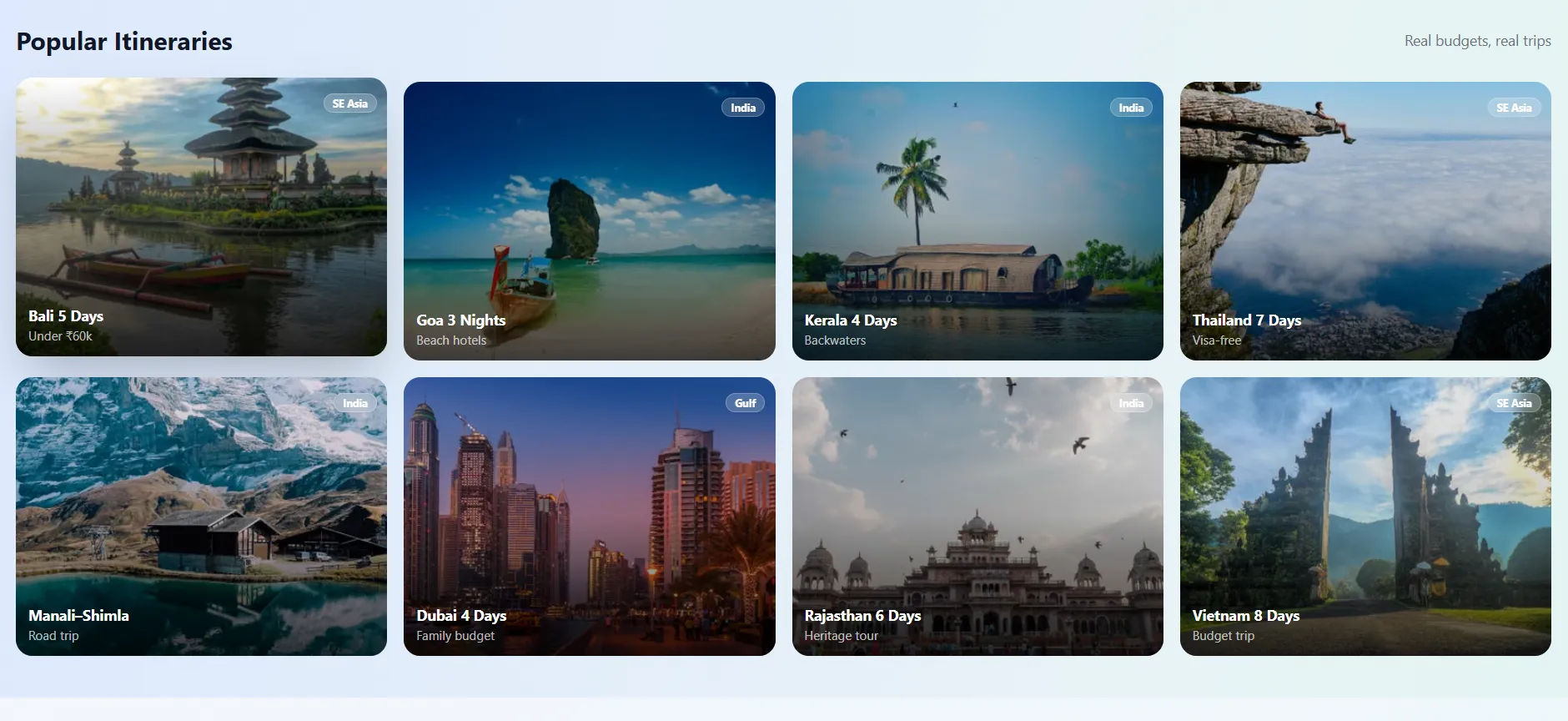
By removing the need to cross-reference multiple websites, the software focuses entirely on logistical feasibility. The platform organizes its functionality into a streamlined workflow: conversational discovery, live price comparison, and collaborative finalization. Currently, the platform has successfully planned thousands of trips across more than one hundred countries, indicating a growing acceptance among digital adopters in the travel space.
3. Core Feature 1: AI-Powered Custom Itineraries (Discovery)
The primary technical differentiator of Tripvexa is its conversational AI planning engine, named Aarya. Standard travel applications usually force you to input rigid dates and specific destinations into static drop-down menus before showing you any relevant information. Aarya operates on natural language intent, acting similarly to standard text-based chat interfaces.
How Conversational Planning Works
Travelers can start the planning process with highly specific, complex text prompts rather than basic search filters. For example, a user can input requests for Bali itineraries like "Bali 5 days under ₹80k" or "best quiet beaches in Thailand for a couple."
- Highly Personalized: Aarya parses these requests for specific requirements. This could include finding locations with strong vegetarian food scenes, finding family-friendly walking routes that are accessible for older parents, or discovering offbeat paths in domestic destinations like Meghalaya. Instead of generating a generic top-ten list, the itinerary reflects the specific constraints of the user's prompt.
- Day-by-Day Structuring: The engine generates a complete, logical day-by-day itinerary. It ensures that activities are geographically grouped to minimize daily transit time. This prevents the common travel mistake of scheduling two attractions on opposite sides of a large city on the same afternoon, which often leads to exhaustion and wasted money on taxis.
- Budget Tracking in Indian Rupees: Every single suggestion made by Aarya is tied back to the user's initial budget constraint. The platform displays estimated costs for daily activities, local food, and transport strictly in Indian Rupees. This eliminates the need for mental currency conversion math and ensures the planned trip remains financially realistic from the first day to the last.
4. Core Feature 2: Integrated Booking and Live Inventory (Control)
A major flaw in early AI travel planners was inaccurate suggestions. These systems would frequently suggest hotels that were permanently closed, fully booked for the season, or far outside of the user's actual budget. Tripvexa solves this fundamental issue by directly integrating a live, real-time booking engine into the planning interface.
Bridging the Gap Between Planning and Booking
Once Aarya generates an itinerary, the platform does not leave the user to figure out the accommodation logistics on their own. The transition from planning the trip to actually purchasing the accommodation is seamless.
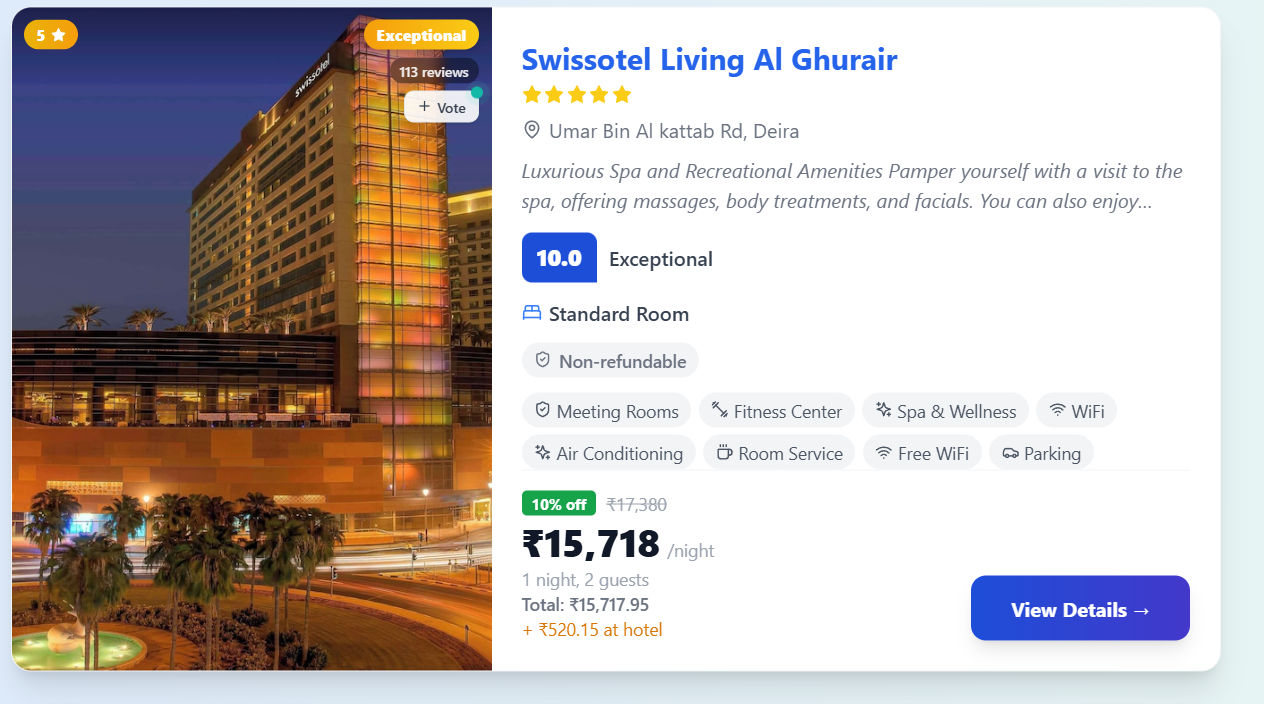
- Large Global Inventory: The platform allows users to compare real-time hotel prices across millions of properties worldwide. This vast inventory ensures that users are not limited to a small selection of partnered hotels. They have access to a global marketplace, ranging from budget hostels to luxury resorts.
- Budget-Aligned Suggestions: The system actively manages the budget parameters. If a user sets a strict limit of ₹60,000 for a total trip, the hotel search results automatically filter to fit the remaining budget after average flights and daily activities are accounted for. The platform shows realistic, bookable options. For example, it will display beach stays in Goa starting from ₹1,500 per night, heritage stays in Jaipur from ₹1,200 per night, or mountain retreats in Manali from ₹1,000 per night (as of 2026), depending on what the remaining budget allows.
- Seamless Transition: Users can read detailed hotel descriptions, view property amenities, and complete the final booking directly through the Tripvexa platform. This transforms an abstract, conceptual itinerary into a concrete, confirmed reservation in a matter of minutes, without the user ever needing to leave the website or open a new browser tab.
5. Core Feature 3: The India-Centric Context Engine (Create)
Travel logistics for Indian citizens involve specific, often frustrating hurdles that global travel platforms either ignore entirely or deprioritize. Tripvexa reintroduces localized context into the planning process, making the tool highly relevant for its core target audience.
Designing for the Indian Traveler
The platform deliberately highlights logistical data that matters most to the Indian demographic.
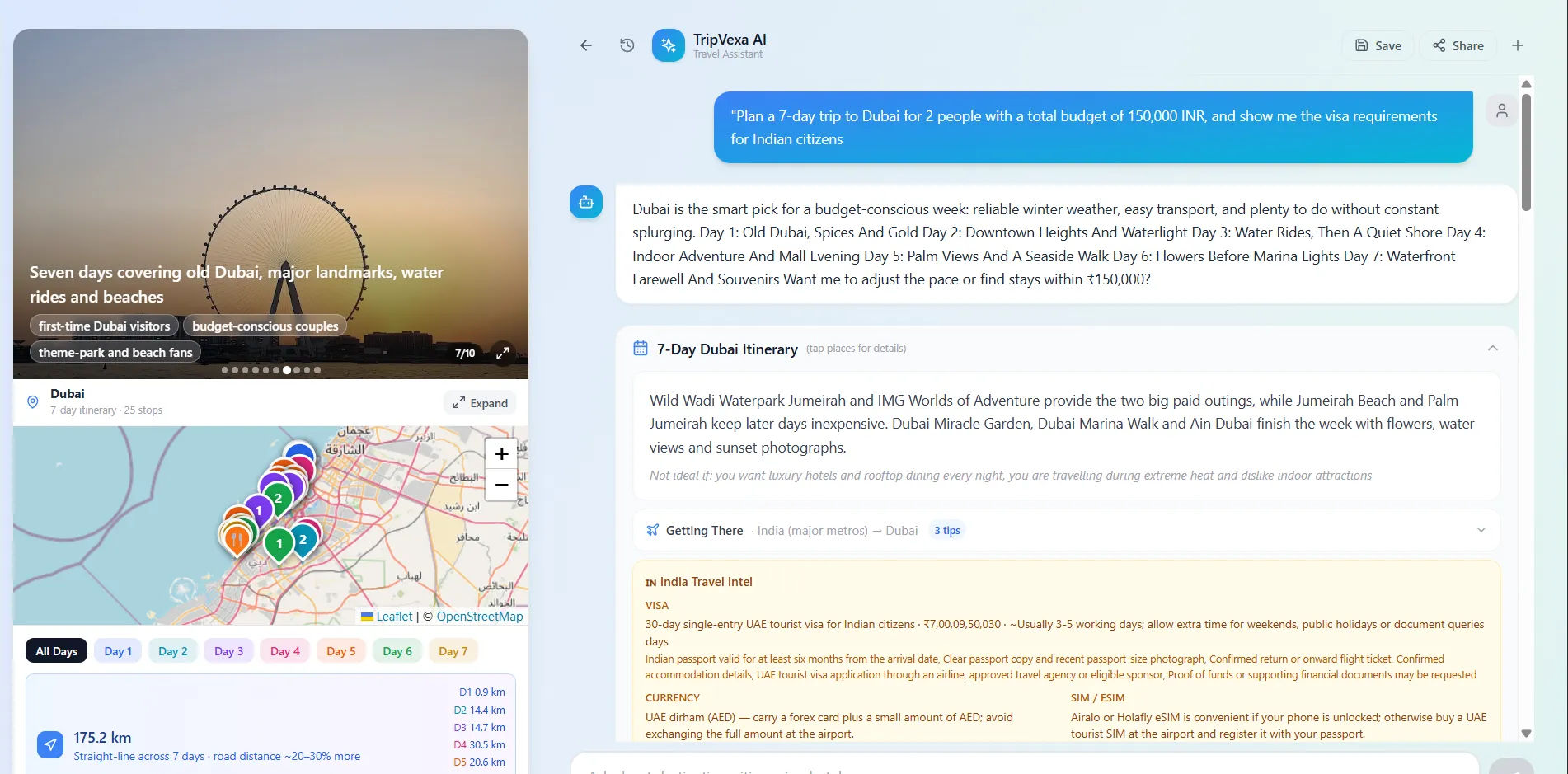
- Visa Intelligence: The system automatically factors in the strength and limitations of the Indian passport. It proactively suggests visa-free destinations, such as Thailand or specific Middle Eastern routes, when users ask for easy or last-minute international trips. For countries that do require a visa, the platform provides clear, step-by-step visa requirements for Indian passport holders. This saves users hours of navigating confusing official embassy websites to figure out documentation requirements.
- Dietary and Cultural Alignment: Aarya successfully handles complex local requests that are common among Indian travelers. Finding pure vegetarian restaurants near a specific hotel in a foreign country, or ensuring that accommodations have suitable accessibility for older family members, are primary concerns. Aarya processes these cultural and dietary requests accurately, ensuring that personal needs are met without hassle.
6. Collaborative Trip Planning for Groups and Families
Indian leisure travel is disproportionately group travel. Whether it is an extended family vacation or a trip with a large friend group, coordinating these plans is notoriously difficult. Typically, one person becomes the default trip planner. This individual ends up doing all the research and is forced to relay options over WhatsApp, collect varying opinions, and repeatedly re-edit a static plan that nobody else can touch or view interactively.
Tripvexa solves this coordination nightmare by treating the itinerary as a shared, editable object rather than a static document. Users can easily share the itinerary via a simple link, allowing multiple people to view and modify the exact same plan simultaneously. When a friend adds a new restaurant or a family member changes a hotel preference, the changes and the updated running budget are visible to everyone in the group in real time.
Incumbent travel platforms have failed to address this because of their foundational architecture. Traditional OTAs are built entirely around a single-cart transaction model. They expect one booker and one payment method, meaning there is no shared planning surface designed for groups. Conversely, generic AI chatbots produce their output inside one private, siloed conversation that nobody else can open, view, or edit.
Consider a concrete scenario where four friends are planning a trip to Thailand. Using Tripvexa, all four friends can open the shared link on their respective devices. Each person can add the specific activities they want to do or suggest alternative hotel options. As they build the trip together, the total cost and individual splits are dynamically updated, ensuring the budget stays visible and transparent to all of them. This collaborative environment eliminates the friction of group travel planning.
7. Industry Use Cases and Traveler Feedback
Because Tripvexa focuses on actionable budgets and localized context, it is highly adaptable across many different types of travel scenarios. Real-world usage from the platform highlights its versatility in solving distinct planning problems.
The First-Time Solo Traveler
Solo international travel requires a high level of confidence in personal safety and logistics. For instance, a user planning a solo trip to Vietnam can request an eight-day itinerary under a strict limit of ₹45,000. The platform delivers a structured daily route, highly affordable accommodation options, and specific visa information tailored for an Indian passport. This significantly lowers the barrier to entry, allowing the traveler to complete the trip within their exact financial constraints without feeling overwhelmed by independent research.
Last-Minute Domestic Escapes
For spontaneous weekend trips, extensive planning is often impossible due to time constraints. A user deciding to visit Goa late on a Thursday night can use the platform to quickly find hotels in a specific area, like Candolim, based purely on their remaining monthly salary. The live hotel inventory allows them to find a suitable stay for ₹1,800 a night and book it in minutes. This proves the platform's utility for rapid, budget-focused execution when time is limited.
Complex Family Vacations
Planning a trip for a large family introduces conflicting preferences. Planners must balance multiple bed requirements, specific dietary restrictions, and overall budget caps. Users have successfully planned complex trips to places like Jordan and Thailand by inputting mixed language prompts. Aarya curates hotel and itinerary packages that accommodate elderly parents and active children simultaneously, providing pure vegetarian dining options and accessible walking routes without requiring hours of manual forum research.
Offbeat and Heritage Travel
For travelers seeking non-traditional routes, Aarya can curate unique experiences that avoid standard tourist traps. A user looking to explore Meghalaya can receive a custom route covering Dawki and Mawlynnong, and the living root bridges. These are locations that require highly specific logistical planning to navigate efficiently. Similarly, users planning heritage tours in Rajasthan or honeymoon trips to private pool villas in Bali can use the platform to find niche accommodations that strictly adhere to their predefined financial limits.
8. The End-User Experience and Onboarding
The success and adoption rate of any consumer software depends heavily on its accessibility and user interface design. Tripvexa is engineered to deliver a clean, frictionless user experience focused entirely on speed and simplicity.
Web-Based Accessibility
Tripvexa operates primarily as a powerful web-based application. It requires no heavy native mobile application downloads to get started, which reduces the initial friction of trying the service. Users simply navigate to the website on their desktop or mobile browser, are greeted by a clean search bar, and can begin interacting with Aarya immediately.
Clean, High-Contrast Interface
Travel research on standard global booking sites is often an unpleasant experience. These sites are frequently plagued by distracting pop-up advertisements and aggressive urgency timers designed to induce panic buying. Tripvexa uses a minimal, user-friendly visual design that avoids these high-pressure tactics.
- No Visual Clutter: The interface focuses entirely on the chat output from Aarya, the interactive map, and clean, standardized hotel listing cards. This deliberate design reduces cognitive load and makes the planning process feel calm and enjoyable rather than overwhelming.
- Interactive Maps: As the day-by-day itinerary is generated, users can visualize their physical route on an integrated map. This ensures the daily pacing makes geographic sense and allows users to see exactly where their recommended hotels are located in relation to their planned daytime activities.
- Saved Trips: Users can create a free account to save their generated trips, share those trips with collaborators via simple links, and return to them days or weeks later without losing their research or having to start the planning process from scratch.
9. Pricing Model vs. Industry Standards
Tripvexa uses a consumer-friendly pricing model designed to build its initial user base and encourage experimentation. This stands in contrast to premium itinerary builders on the market that charge upfront software access fees or require mandatory monthly subscriptions to unlock core features.
Free Early Access
Currently, the platform is entirely free for early users. This price point includes full, unrestricted access to the AI Trip Planner, the Interactive Maps, the Collaborative Planning features, and the live Hotel Search engine. It is an ideal setup for any traveler looking to test the capabilities of AI trip generation without making any financial commitment.
Transparent Ecosystem
Rather than charging the user a direct fee to generate an itinerary, Tripvexa monetizes the actual transaction of the hotel bookings. Because it acts as an online travel agency for its large inventory of properties, the software interface itself remains free to use. This allows travelers to experiment with unlimited destination ideas and generate multiple different itineraries before they actually spend any money on a final hotel booking.
10. Limitations and When to Choose Alternative Tools
An objective evaluation requires identifying the natural boundaries of the software. Tripvexa is explicitly designed to streamline the planning and booking phase for mainstream international and domestic leisure travel. There are specific scenarios where travelers will need to use alternative, specialized tools.
Not Built for Extreme Niche Backpacking
If a traveler's explicit goal is to hitchhike through unmapped villages without any pre-booked accommodation, the primary strength of Tripvexa, which is its live hotel inventory, becomes largely irrelevant. Aarya thrives on structure, logical daily routes, and bookable, verified inventory. It is not designed for completely off-grid survival travel or extreme adventure trekking where standard hotels do not exist.
Lack of Corporate Integration
As a platform designed primarily for leisure travelers, families, and solo tourists, it naturally lacks the heavy, legacy enterprise integrations found in older corporate travel tools. Travelers who are booking for business and looking for automated corporate expense reporting, strict company policy compliance tracking, or deep airline loyalty point integrations will need to rely on traditional corporate booking tools.
AI Interaction Learning Curve
Because the initial planning funnel relies heavily on the open text box of the AI chat interface, users who prefer traditional, manual spreadsheet planning might face a slight learning curve. Users who are accustomed to clicking through hundreds of specific drop-down filters to find what they want must adapt to prompt-based search. Asking Aarya a question requires a different mental approach to travel planning than checking boxes on a standard search form.
11. Summary Conclusion
Bridging the gap between travel inspiration and actual, concrete booking has always been a challenging part of planning a vacation. The traditional reliance on disconnected travel blogs, generic AI chatbots, and cluttered booking sites forces travelers into hours of stressful, spreadsheet-driven research.
Tripvexa offers an effective, practical solution to the modern travel dilemma, specifically tailored for the needs of the Indian market. By combining Aarya's conversational AI planning with a large, live-priced hotel inventory, the platform successfully eliminates the friction between deciding where to go and figuring out where to sleep.
The end-user experience is straightforward and highly efficient. Typing a plain-language prompt yields a geographically logical, budget-accurate itinerary in a matter of seconds. While it may not replace specialized corporate expense tools or cater to off-grid survival backpackers, Tripvexa delivers precisely on its core promise. It helps people plan smarter trips, price those trips accurately in Indian Rupees without complex conversion math, and book the required accommodations seamlessly within one unified digital platform.

